Clear communication can make a huge difference on a production.
When everyone is standing close together, you can usually manage with hand signals, quick instructions and a bit of shouting across the room. But once your crew is spread across a studio, venue, livestream setup or multi-camera shoot, communication becomes harder to manage.
That is where a wireless intercom system becomes useful.
The Accsoon CoMo II is designed for production teams that need clear, hands-free communication without a traditional base station. It is available in different kit sizes, from a compact 3-person setup through to a larger 9-person system.
This guide will help you decide whether CoMo II suits your workflow, and which kit is the best fit for your crew.
You may not need a wireless intercom for every shoot. For a one-person setup or a very small production where everyone is standing close together, it may be more than you need.
But once your team is separated across different positions, a proper comms system can make the whole production run more smoothly.
You should consider a wireless intercom system if:
For productions like livestreams, commercial shoots, multi-camera setups and live events, wireless crew communication can help reduce missed cues, repeated instructions and production delays.
The Accsoon CoMo II is a full-duplex wireless DECT intercom system. In simple terms, that means crew members can talk and listen at the same time, more like a natural conversation.
It is also a base-station-free system. Instead of needing a separate central base station, the host headset connects directly to the remote headsets. This makes the system more portable and easier to set up, especially for crews moving between locations.
Key CoMo II features include:
The main decision is not whether the system is capable. It is choosing the right kit size for the way your crew works.
| Crew size | Recommended kit | Best for |
|---|---|---|
| 1 additional user | Remote Headset | Expanding an existing CoMo II system |
| 1 host user | Host Headset | Starting, replacing or expanding the host side of a system |
| 3 users | 1H2R Kit | Small shoots, livestreams and compact crews |
| 5 users | 1H4R Kit | Mid-sized video teams and small event crews |
| 7 users | 1H6R Kit | Larger productions and multi-camera teams |
| 9 users | 1H8R Kit | Full crew communication across larger sets or venues |
For a closer look at how the CoMo II system works, watch the product overview below.
If you are working with a small production team, the Accsoon CoMo II 1H2R Kit is likely the most practical starting point.
This gives you one host headset and two remote headsets, creating a 3-person communication system.
A common setup could be:
This is a good fit for small commercial shoots, interviews, product videos, corporate content, short-form content and compact livestream setups.
Recommended product:
Accsoon CoMo II 1H2R Kit
If your crew regularly includes multiple camera operators or a mix of camera, floor and production staff, the Accsoon CoMo II 1H4R Kit is a strong middle option.
This kit includes one host headset and four remote headsets, giving you communication for up to 5 users.
A typical setup could include:
This is a practical option for studio shoots, livestream control, small event coverage, commercial production and multi-camera video work.
Recommended product:
Accsoon CoMo II 1H4R Kit
For teams that need to connect more camera operators, technical crew or event staff, the Accsoon CoMo II 1H6R Kit gives you a 7-person setup.
This kit includes one host headset and six remote headsets.
A 7-person setup could work well for:
This kit gives you more flexibility when multiple people need to hear directions at the same time. It is also useful when your crew is spread across a larger space, such as a venue, studio floor or outdoor location.
Recommended product:
Accsoon CoMo II 1H6R Kit
If you want the largest CoMo II setup, the Accsoon CoMo II 1H8R Kit supports up to 9 users.
This kit includes one host headset and eight remote headsets.
It is best suited to larger productions where several crew members need to stay connected, such as:
This is the kit to choose when communication needs to extend beyond just the director and camera operators. It allows floor crew, assistants, technical operators and other key team members to stay connected throughout the production.
Recommended product:
Accsoon CoMo II 1H8R Kit
The single headset options are best for expanding or maintaining an existing CoMo II system.
The host headset acts as the control centre of the system. It connects directly to compatible remote headsets.
Choose the host headset if you need to start a system, replace a host unit, or add a host headset for a specific workflow.
Product link:
Accsoon CoMo II Host Headset
The remote headset is used to add another crew member to an existing CoMo II setup.
Choose the remote headset if you already have a host headset or kit and want to bring another operator, assistant or crew member into the communication system.
Product link:
Accsoon CoMo II Remote Headset
Before choosing your CoMo II kit, think about how your crew actually works on set.
Start with the number of crew members who need to be part of the conversation. If only three people need comms, the 1H2R kit may be enough. If you regularly have camera, floor and technical crew all needing direction, a larger kit will be more useful.
If your productions are getting bigger, it may be worth choosing a kit with more headsets than you need right now. This gives you room to scale without needing to rebuild your communication setup later.
For events, outdoor shoots and busy sets, noise reduction becomes more important. CoMo II includes ENC and AI noise cancellation to help keep voices clear when there is background noise.
If you regularly move between sets, venues or locations, a base-station-free system can save time. CoMo II keeps the setup simpler because you do not need to manage a separate central base station.
For long shoots and full-day events, headset comfort matters. The CoMo II headset is lightweight, making it easier to wear across extended production days.
For a simple livestream, the 1H2R kit could connect:
This gives the producer a direct line to the key people managing the shot and floor activity.
For a small studio production, the 1H4R kit could connect:
This is useful when camera cues, talent direction and technical changes need to happen quickly.
For event coverage, the 1H6R kit could connect:
This helps keep the team connected across a larger venue.
For larger live productions, the 1H8R kit can connect a wider team across camera, production, floor and technical roles.
This is useful when multiple people need to hear the same instructions at the same time and respond quickly.
Some communication systems rely on push-to-talk operation, where one person speaks while others wait. That can work in some situations, but it is not always ideal for fast-moving productions.
Full-duplex communication allows users to speak and listen at the same time. This is helpful when a director needs a fast response, when a camera operator needs to confirm a cue, or when a floor manager needs to report back quickly.
For production teams, that more natural conversation can make communication feel smoother and more immediate.
A traditional intercom setup can involve a base station, cabling and additional hardware. That may be fine in permanent installations, but it can slow down mobile crews.
CoMo II removes the need for a central base station. The host headset connects directly with remote headsets, making the system easier to set up and pack down.
This is useful for:
Less gear also means less time spent building the communication system before the production starts.
A wireless intercom system is only useful if people are willing to wear it.
The CoMo II headset is designed to be lightweight, with a 170 g headset design that helps reduce fatigue over long shoots. The headset also supports replaceable ear cushions and a flexible fit, making it more comfortable for different users and longer sessions.
For full-day productions, that comfort can make a real difference.
Production environments are often noisy. Even in a controlled studio, there may be lights, fans, movement, crew chatter and background sound. At events or outdoor locations, noise can be even harder to manage.
CoMo II uses ENC and AI noise cancellation to help reduce background noise and keep voices clearer.
This is especially useful for:
Clearer voice communication helps reduce repeated instructions and missed cues.
If you are choosing your first Accsoon CoMo II kit, start with your actual crew size.
For small teams, the 1H2R Kit is the easiest entry point. For mid-sized productions, the 1H4R Kit gives more flexibility. For larger events and multi-camera teams, the 1H6R Kit or 1H8R Kit will be a better match.
Choose the kit that covers the people who need to communicate every time, then consider whether your productions are likely to grow.
The Accsoon CoMo II 1H2R Kit is best for small crews. It includes one host headset and two remote headsets, creating a 3-person communication system.
For live events, the best kit depends on crew size. The 1H4R Kit suits smaller event teams, while the 1H6R and 1H8R kits are better for larger crews spread across a venue.
No. The Accsoon CoMo II is designed as a base-station-free wireless intercom system. The host headset connects directly to compatible remote headsets.
Full-duplex means users can talk and listen at the same time. This makes communication feel more natural than push-to-talk systems.
The largest CoMo II kit supports up to 9 users, with one host headset and eight remote headsets.
Yes. CoMo II is well suited to livestreaming because it allows the producer, floor crew and camera operators to communicate clearly in real time.
Yes. You can add compatible host or remote headsets depending on your setup and communication needs.
The Accsoon CoMo II offers up to 400 m transmission range in suitable conditions.
Yes. CoMo II includes ENC and AI noise cancellation to help reduce background noise and improve voice clarity.
Yes. CoMo II supports external 3.5 mm headsets, allowing users to connect compatible personal earphones for comfort and hygiene.

Simple instalment plans available instantly at checkout
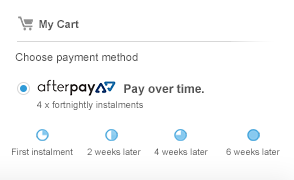

Use your existing debit or credit card

No long forms, instant approval online

Pay fortnightly, enjoy your purchase straight away!
All your need is:
1) An Australian Visa or Mastercard debit/credit card; 2) To be over 18 years of age; 3) To live in Australia
To see Afterpay's complete terms, visit https://www.afterpay.com.au/terms
© 2026 Afterpay

