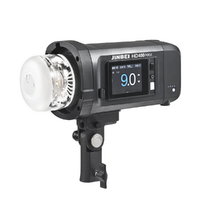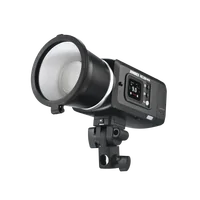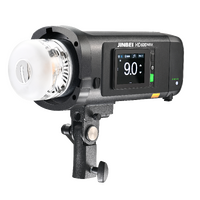
Jinbei HD600MAX TTL Battery Flash 600ws with HSS and Fast flash duration
Now AU$899.00
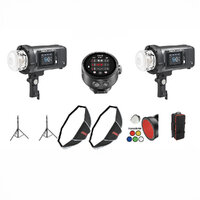
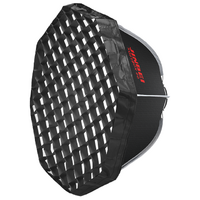
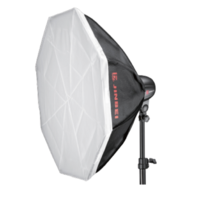
Jinbei HD400MAX Battery Flash Twin Kit with Softboxes, Roller Bag & TRQ8 Trigger
AU$2,469.00
Take studio-quality flash power beyond the studio with battery flash equipment from PROtog. Designed for photographers who need strong, controllable lighting without relying on mains power, portable battery flash is ideal for portraits, weddings, fashion, editorial work and commercial photography on location.
Explore standalone battery monolights and complete battery flash kits with the output and modifier compatibility needed for professional lighting setups. Compare power, recycle time, battery capacity, TTL, high-speed sync and wireless control to choose a system that suits your camera and workflow.
Battery flash combines the power and light-shaping capability of studio flash with the freedom of a rechargeable power source. Unlike a compact speedlight, a battery monolight generally provides greater output and can support larger softboxes, reflectors and other studio modifiers.
Many battery flash units integrate the flash electronics and battery into a single portable body. This makes them quick to position around a location while reducing the need for extension leads and separate power packs. Some systems also allow AC adapters or spare batteries to be used when longer operating times are required.
The best battery flash depends on the subject, modifier size, shooting distance and amount of ambient light. Important features to compare include:
Output is commonly measured in watt-seconds. Higher output can be useful for large modifiers, groups, full-length portraits and bright outdoor conditions. Lower-powered units may be lighter and easier to carry for headshots, close portraits and smaller product setups.
A broad adjustment range gives you more control when moving between bright outdoor work and lower-power indoor setups. Fine power increments can also make exposure balancing easier when several lights are used together.
Compare the estimated number of flashes per charge, charging time and availability of spare batteries. Actual performance will vary with flash power, modelling-light use, temperature and shooting frequency.
Recycle time affects how quickly the unit is ready to fire again. Flash duration is particularly important when photographing movement, water, fabric or other fast action that needs to be frozen sharply.
TTL can adjust flash output automatically through a compatible camera and trigger, helping when subjects or lighting conditions change quickly. Manual control provides repeatable output for controlled portraits, products and commercial sets. Many photographers use both modes depending on the assignment.
High-speed sync allows compatible cameras and flash systems to operate above the camera’s normal flash sync speed. It can be useful when working with wide apertures in bright daylight, although maximum effective output may be reduced in HSS mode.
Portable flash gives you control over the direction and intensity of light when the sun is too harsh, too flat or behind the subject. A battery monolight can be used as a key light, fill light or rim light while retaining enough portability for location work.
When using softboxes or umbrellas outdoors, secure the stand with suitable counterweights or sandbags and use an assistant where necessary. Wind can place considerable force on large modifiers, even when the flash itself is compact.
Battery flash is also practical in permanent and temporary studios. Removing power cables can simplify the set and make lights easier to reposition. For longer sessions, consider spare batteries, charging arrangements and whether the selected unit supports an optional mains-power solution.
A complete kit may include two flash units, light modifiers, stands, a wireless trigger and a transport case. Kits can provide a coordinated starting point for portrait and location work, but supplied components vary between products.
Individual battery flash units are useful when expanding an existing wireless system or building a custom kit with your preferred stands and modifiers. Check the product listing carefully to confirm what is included.
Before purchasing, confirm compatibility between the camera, transmitter and flash. TTL and high-speed sync are often camera-system specific, even when basic manual triggering works across multiple brands. Also check the modifier mount, stand fitting, battery model and any accessories required for your intended setup.
A speedlight is smaller and often designed for on-camera use. Battery studio flash generally offers greater output and support for larger modifiers, making it better suited to demanding portrait, fashion and commercial lighting.
Yes. Battery-powered flash can be used in studios, homes and event spaces as well as outdoors. It is particularly useful where running power cables would be inconvenient.
The number varies by model and depends on the selected power level, modelling-light use, temperature and shooting pace. Refer to the individual product specifications and consider a spare battery for long assignments.
Yes, provided the softbox or speed ring matches the flash unit’s modifier mount and the stand can safely support the complete setup.
A compatible transmitter is normally required for off-camera triggering and remote control. Check whether one is supplied with the flash or kit and confirm support for your camera system.

Simple instalment plans available instantly at checkout

Use your existing debit or credit card

No long forms, instant approval online

Pay fortnightly, enjoy your purchase straight away!
All your need is:
1) An Australian Visa or Mastercard debit/credit card; 2) To be over 18 years of age; 3) To live in Australia
To see Afterpay's complete terms, visit https://www.afterpay.com.au/terms
© 2026 Afterpay